Glass Choice
Have you chosen your frames for sports or work? Then the lens selection for sports and safety glasses follows. You decide which lenses are best for your use: single lenses, progressive lenses or options such as self-tinting, polarized and anti-fog. So you will always find the right solution for sharp and comfortable vision.
Single or progressive lenses
Many people find it difficult to choose the right lenses. When choosing lenses for sports and safety glasses, it is often a question of whether single or progressive lenses are a better fit.
A single-pane lens is suitable when you need one fixed strength, such as only for distant or only for near. This type of lens is ideal for athletes who want sharp vision mainly at one distance, or for users of safety glasses who need continuous clear vision while working.
When you need good vision both near and far, progressive lenses are often the better choice. These lenses combine multiple strengths in one lens, eliminating the need to switch between different glasses. This can be useful for cyclists who want to see both the road and their bike computer, as well as for professionals who work with safety glasses and need to regularly switch between near and far.
Type color lenses for sports and safety glasses
When choosing lenses for sports and safety eyewear, lens color plays a major role. Each tint has its own effect on contrast, vision and protection. Are you unsure which lenses are best for your situation? Below you will find an overview of the most commonly used colors and their advantages, so you can easily make the right choice.
Clear glass
Clear glass is often chosen for indoor use or for sports and work in less bright light conditions. It provides protection without altering color perception. For safety glasses, this is a commonly chosen option because you always maintain sharp and undistorted vision.
Multi-colored glass
Multi-colored glass is also called Transitions or photochromic glass. These glasses are transparent inside and turn into light sun lenses outside in the sun. They tint up to about 85% absorption of sunlight, similar to normal sunglasses.
The self-tinting lenses have advanced significantly in recent years. Whereas in the past you sometimes had to wait 3 to 5 minutes for glasses to become clear again, with today’s technology this often takes only about one minute. The darkening of the lenses usually happens within seconds.
Polarized lenses
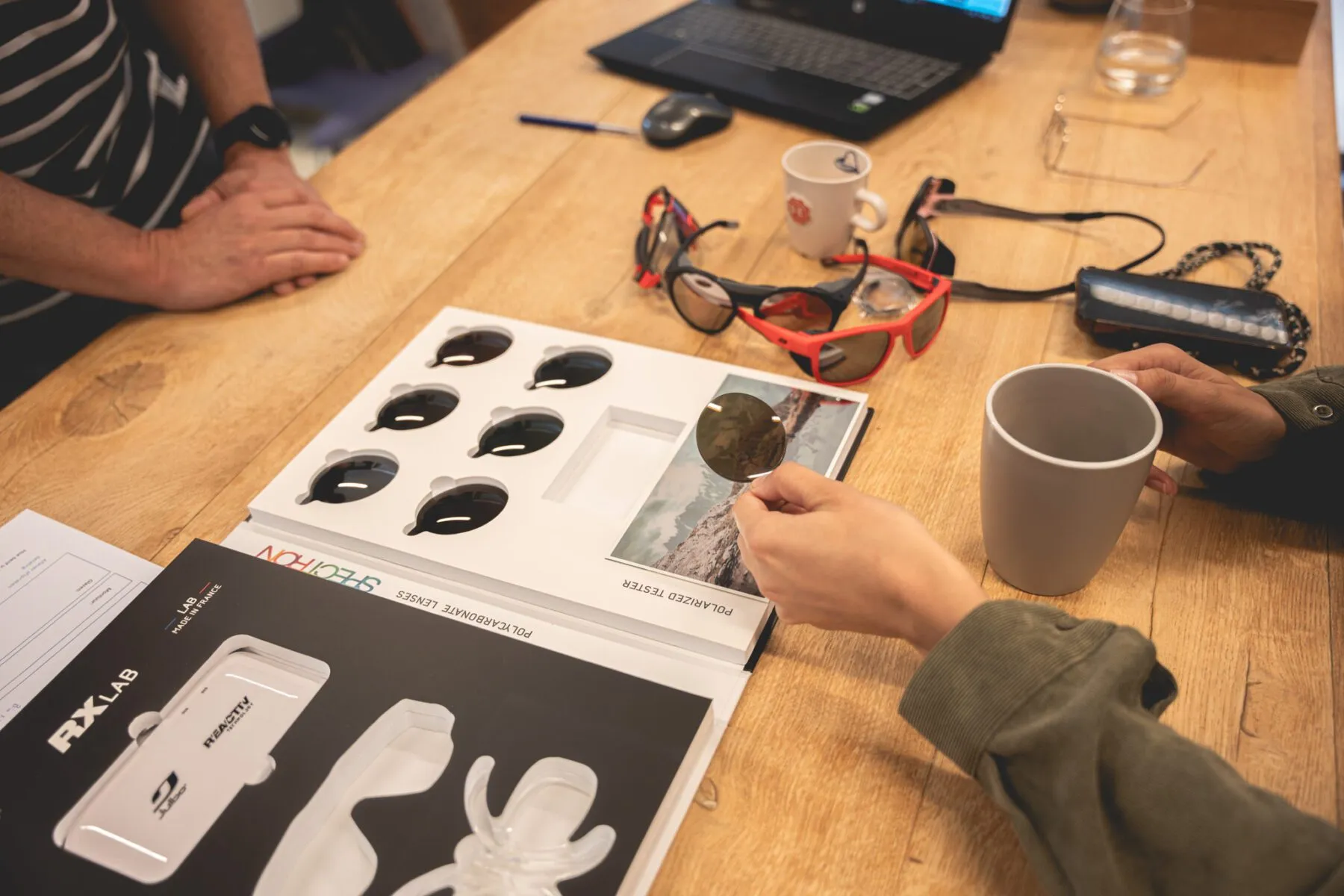
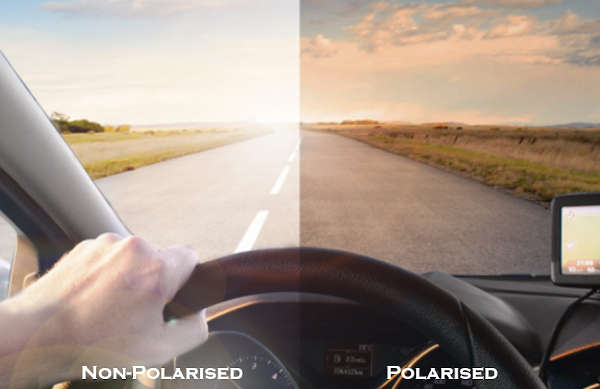
Polarized lenses eliminate annoying glare coming from horizontal surfaces, such as a wet road surface, a water surface or a ski slope. As a result, you experience better sharpness and more contrast during a sailing trip or ski run, for example. Thus, polarized lenses give more peace of mind to your eyes.
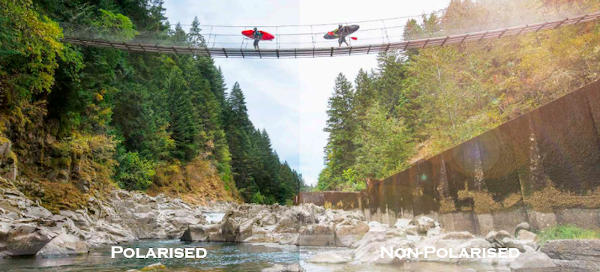
Solar glass
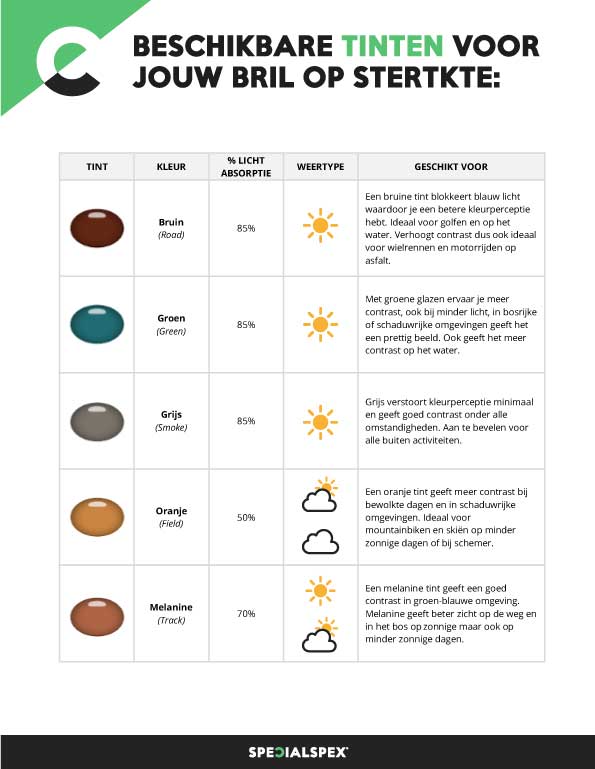
We have a choice of five colors of sun lenses: brown, green, gray, orange and melanin (yellow-brown).
The percentage tint in a solar glass indicates how much light is absorbed. The brown, green, gray and melanin tints have 85% tint. The orange tint offers about 50% absorption.
Your activities determine which shade is most appropriate.
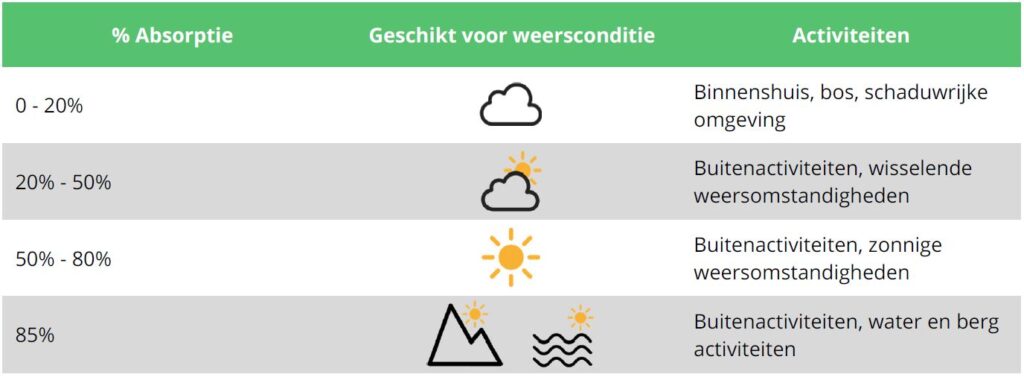
Which tint is most suitable for my glasses?
Gray lenses (Smoke)
The most common tint for normal use is gray. This tint minimally distorts color perception and provides good vision in various weather conditions. However, for cycling or running on asphalt, a gray tint may provide slightly less contrast, making details on the road less visible.
Green lenses (Green)
Green lenses filter yellow and blue light to a lesser extent. As a result, you experience more contrast in shaded conditions. Especially in wooded environments, the green becomes calmer and more pleasant to the eyes.
Brown Glasses (Road)
With brown glasses, you experience more contrast and better depth perception. Brown is an ideal tint for road cycling and running. Even on sunny days on the water, a brown tint provides good depth perception and contrast. In addition, a brown tint often makes the surroundings more vivid.
Orange lenses (Field)
Orange lenses are ideal when you want more contrast, for example when skiing in cloudy conditions. They filter blue light and therefore provide extra contrast. These lenses also work well in wooded environments. In addition, they are often used at night or in low light conditions.
Yellow-Brown (Melanin) Glasses (Track)
SpecialSpex’s yellow-brown glasses are specially designed for outdoor sports. They offer slightly more contrast than standard brown lenses and filter blue light. This makes them suitable for a variety of outdoor activities, both in full sun and in shaded environments.
Golf glasses
When playing golf, pink or purple glasses are ideal. These colors offer good contrast against the green surroundings. This makes objects more visible and easier to distinguish on the course. In addition, the image often looks calmer and softer.
Yellow glasses
Yellow glasses filter blue light, increasing contrast and sharpness. On cloudy days on the slopes, they can improve vision. They are also used to see more contrast at night, such as when motorcycling.
Special colors and filters
Golf and yellow lenses are not in our standard lens program, but can be ordered prescription lenses for an additional charge. If you would like sports glasses with a lighter or darker tint than the standard 85%, please contact us. We will be happy to discuss the possibilities.
Mirror glasses
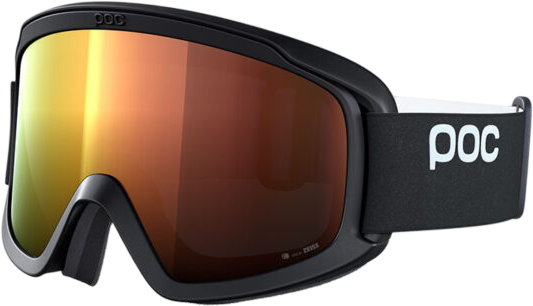
Mirror glasses are popular for their cool look, but they also have a functional benefit. Sports glasses or safety glasses with mirror lenses provide extra protection from bright sunlight and reduce glare.
For athletes, mirror lenses are ideal for activities in full sun, such as cycling, winter sports and water sports. They provide calmer vision and greater comfort in bright light. For safety glasses, mirror lenses are useful when working outdoors in open areas or where sunlight and reflections can be distracting.
Anti-fog lenses: always clear vision
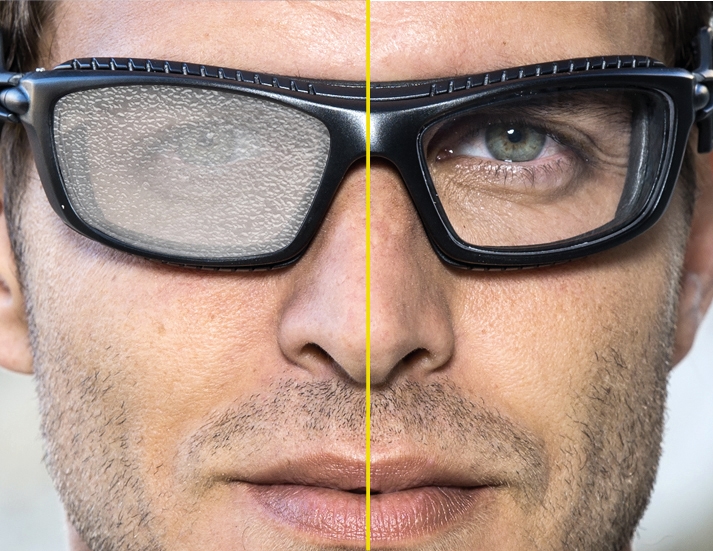
Glasses that fog up during exercise or work can be very distracting. Condensation occurs when warm, moist air (for example, breath or sweat) comes into contact with a colder glass surface. The water vapor then turns into tiny droplets that form as a layer on the lens, making your vision blurry.
Within the glass selection for sports and safety glasses, anti-fog lenses therefore play an important role. Thanks to a special coating or treatment, water vapor spreads evenly across the lens instead of forming loose droplets. This keeps your vision clear, even in challenging conditions.
For athletes, anti-fog lenses are ideal for activities in the cold or during intense exercise. For wearers of safety glasses, they are indispensable in hot or humid work environments, when wearing a mouth guard or when walking frequently from indoors to outdoors. So you always stay sharp and see safely.